
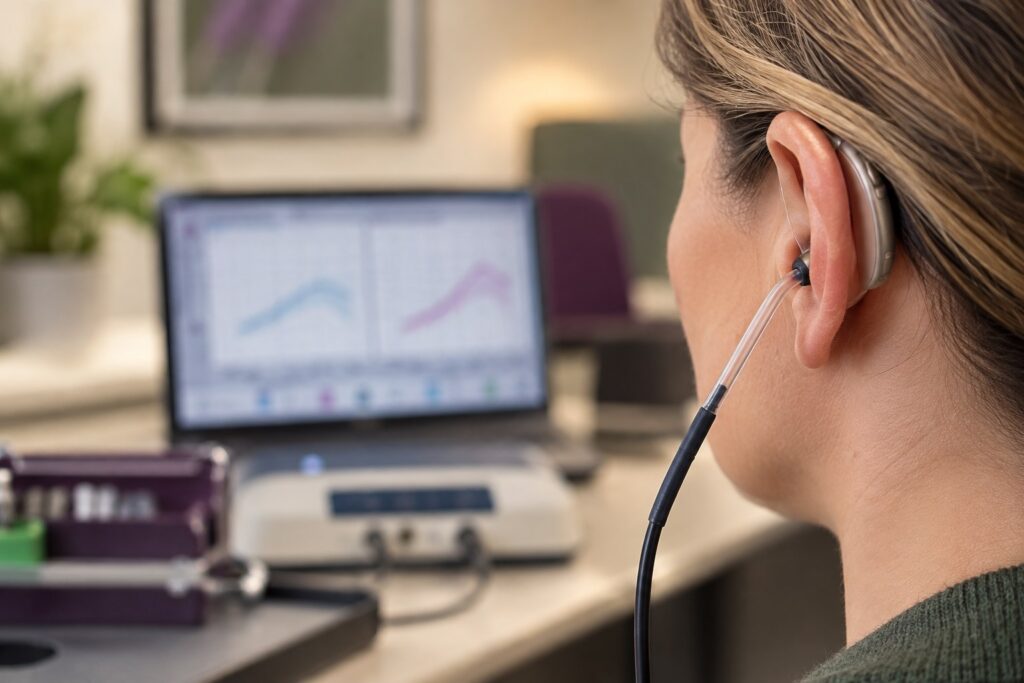
Real Ear Measurements (REM) help verify that hearing aids deliver the intended sound in your own ears. Hearing aids are not simply taken from a box and switched on. Even two people with a similar audiogram can have different ear-canal acoustics. That is why measuring the sound that actually reaches your eardrum is such an important part of a careful hearing-aid fitting.
At Wigan Hearing in Standish, Real Ear Measurements (REM), sometimes called probe-microphone measurements or real-ear verification, form part of our personalised fitting process.
What exactly are Real Ear Measurements?
REM uses a very thin probe tube placed into the ear canal alongside the hearing aid. A calibrated loudspeaker presents test signals or speech-like sounds, while the probe microphone measures the amplified sound inside your ear.
Your audiologist compares those measured levels with an appropriate fitting prescription based on your hearing-test results. This helps check that quiet speech is audible and that louder sounds are not unnecessarily uncomfortable.
Why don’t the hearing-aid manufacturer’s default settings tell the whole story?
The manufacturer’s initial settings are a useful starting point, but software predictions are based on assumptions about ear acoustics. Actual canal shape, ear mould or dome fit, venting and the way a hearing aid sits can all change the sound delivered.
REM provides objective information that can be used to make adjustments, rather than relying only on a prediction or asking the wearer whether everything sounds fine.
What happens during a real-ear verification appointment?
- Examination and fitting: We check the ear, review your audiogram and ensure the device sits appropriately.
- Probe-tube placement: A slim, flexible measurement tube is positioned gently in the canal. It may feel unusual but should not be painful; tell us if you need to pause.
- Sound measurements: You listen to calibrated signals while the microphone measures what the hearing aid is delivering.
- Adjustment and rechecking: We adjust relevant settings and remeasure when necessary, taking account of your hearing goals and comfort.
- Everyday listening review: We also ask about real situations—conversations, television, telephone calls and background noise—because REM is an important verification step, not a complete measure of your experience.
Does REM make every hearing aid perfect?
No. Hearing aids can improve access to sound, but they cannot restore normal hearing or remove every listening difficulty. Speech understanding in busy environments, your listening experience and the time needed to adapt still matter. A well-verified fitting can provide a stronger starting point for fine-tuning and ongoing aftercare.
Is Real Ear Measurement the same as a hearing test?
No. A hearing assessment measures aspects of your hearing ability; REM checks how a fitted hearing aid delivers amplified sound. Both help inform personalised care. Our comprehensive hearing assessment costs £50, credited towards hearing aids purchased from Wigan Hearing.
What else should you expect from a good hearing-aid fitting?
Good care includes discussing what you want to hear better, the suitability of different devices, how to use and maintain them, and what to do if you struggle. Follow-up can involve further fitting adjustments, cleaning guidance, troubleshooting and support with compatible accessories.
We are independent and can discuss technology from multiple hearing-aid manufacturers rather than one restricted range. Our hearing aids include a five-year manufacturer warranty and ongoing local aftercare appointments; cover for loss, accidental damage and consumables is different from cover for manufacturing faults. We explain the terms before purchase.
You can read the NICE guidance on hearing assessment, fitting and follow-up for a wider overview of recommended care.
Questions patients often ask
Will REM hurt?
Probe-tube measurement is generally well tolerated. A slim tube is positioned in the canal, and we explain what is happening and pause if needed.
Are expensive hearing aids always better than a carefully fitted less expensive model?
Not necessarily. Appropriate features, audiological needs, acoustic fit, verification and follow-up all matter. We help you compare suitable options based on your hearing needs, lifestyle and budget.
Can I have my existing hearing aids checked?
Contact the clinic with the make and model of your devices and we can advise which assessments, checks or adjustments we can offer.
Independent hearing-aid fitting in Standish, Wigan
For an overview of our hearing-aid service, or to arrange a comprehensive hearing test and discuss REM, call 01257 444044. Visit us at 30 Preston Road, Standish, Wigan WN6 0HS. Free customer parking is available behind the clinic.
What happens after the REM verification?
Real-ear measurement checks the hearing aid’s sound output against prescribed targets. Your audiologist should also consider whether the device is physically comfortable, how you understand speech and what happens outside the clinic. Follow-up fine-tuning can address practical difficulties that are not captured by a single measurement.
Read our step-by-step hearing aid fitting guide and care advice for domes, filters and receivers.