
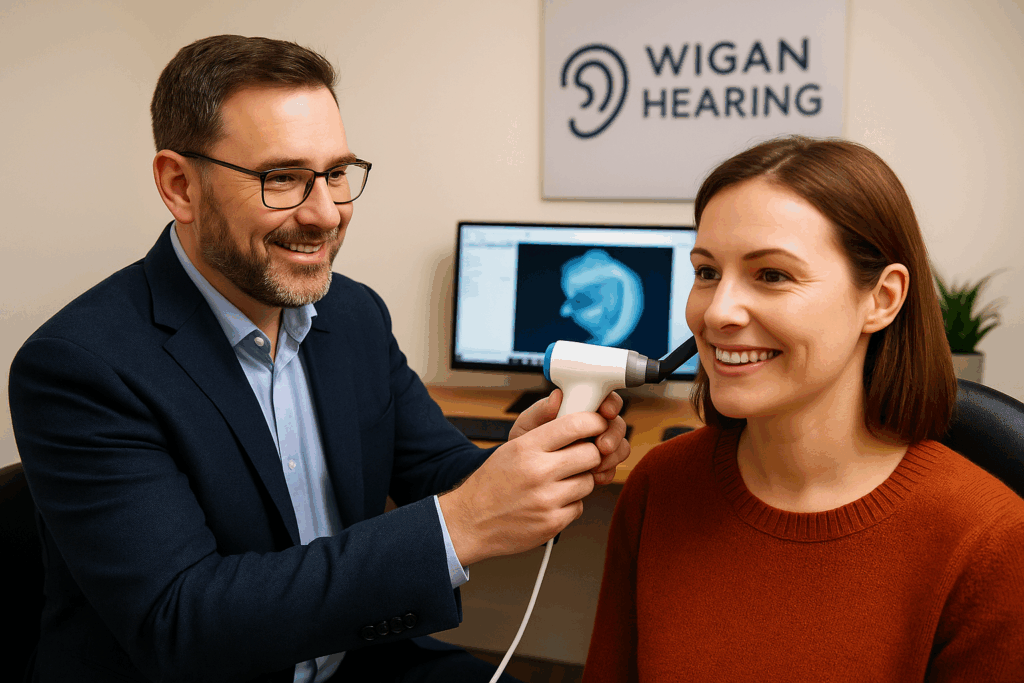
Tinnitus is the experience of hearing a sound when there is no matching external sound source. People describe ringing, buzzing, hissing, humming or other noises in one or both ears, or in the head. It can be intermittent or persistent. Tinnitus is common and often manageable, but the right approach depends on the individual.
What causes tinnitus?
Tinnitus is often associated with hearing loss, but it can also occur with normal measured hearing. Possible contributing factors include noise exposure, ear conditions and some medications. It does not automatically mean that something serious is wrong. A clinician may examine the ears and arrange an audiological assessment to check for hearing loss or another identifiable cause.
What does tinnitus feel like?
Some people are barely aware of it, while others notice an effect on concentration, sleep or mood. Distress can make the sound feel more intrusive, which in turn can affect sleep and anxiety. The experience is real; it is not simply something a person can decide to ignore.
How can hearing aids help?
When tinnitus occurs alongside hearing loss, appropriately fitted hearing aids can improve access to everyday environmental sounds and conversation. For some people, the increased external sound also makes tinnitus less noticeable. Hearing aids do not reliably remove tinnitus itself, and benefit varies.
NICE recommends offering amplification when a person has tinnitus plus hearing loss that affects communication. It advises considering amplification with hearing loss even without communication difficulty, but not offering hearing aids solely for tinnitus when there is no hearing loss. Fitting should follow an appropriate assessment.
Find out about hearing aids information and how hearing aid settings can be checked with real-ear measurements.
How does cognitive behavioural therapy (CBT) help?
CBT is a structured psychological therapy that helps people recognise unhelpful thinking patterns and responses, manage distress and build coping strategies. Tinnitus-focused CBT aims to reduce the impact tinnitus has on daily life; it does not promise to eliminate the sound.
It may cover the relationship between attention, worry, sleep and behaviour, as well as practical ways to respond to tinnitus without it dominating daily activities. The approach is especially relevant when tinnitus continues to affect wellbeing after initial advice and support.
Do you need hearing aids, CBT or both?
They address different needs. Hearing aids primarily treat an accompanying hearing loss and may make tinnitus less noticeable. CBT targets tinnitus-related distress. Some people benefit from one approach, others may use more than one following specialist assessment. Neither is a guaranteed cure.
NICE recommends a stepped approach to tinnitus-related psychological therapies for adults with ongoing distress, including digital, group and individual tinnitus-related CBT delivered by appropriately qualified providers. Wigan Hearing does not advertise or claim to provide psychological CBT treatment here; ask a GP about appropriate local referral pathways.
What about background sound or sleep?
Some people find low-level, comfortable background sound, a consistent bedtime routine and stress-management strategies helpful. Avoid making the sound excessively loud. The evidence does not support a single sound-treatment method for everyone, so a personalised plan matters.
When should tinnitus be assessed urgently?
Seek emergency assessment for tinnitus after a head injury or with sudden hearing loss, facial weakness or acute vertigo, in line with NHS advice. If it beats in time with your pulse, request an urgent GP appointment. Persistent one-sided tinnitus, asymmetrical hearing loss or significant distress also warrants appropriate clinical assessment.
Where can I get support?
An audiological assessment can help identify associated hearing loss and determine whether hearing aids might be appropriate. For hearing-related enquiries, contact Wigan Hearing. For CBT or broader health concerns, contact your GP or relevant specialist service.
Sources
NICE guideline NG155: Tinnitus assessment and management · NHS: Tinnitus · NHS: Cognitive behavioural therapy.
Information reviewed October 2026. This guide is general information, not an individual diagnosis.